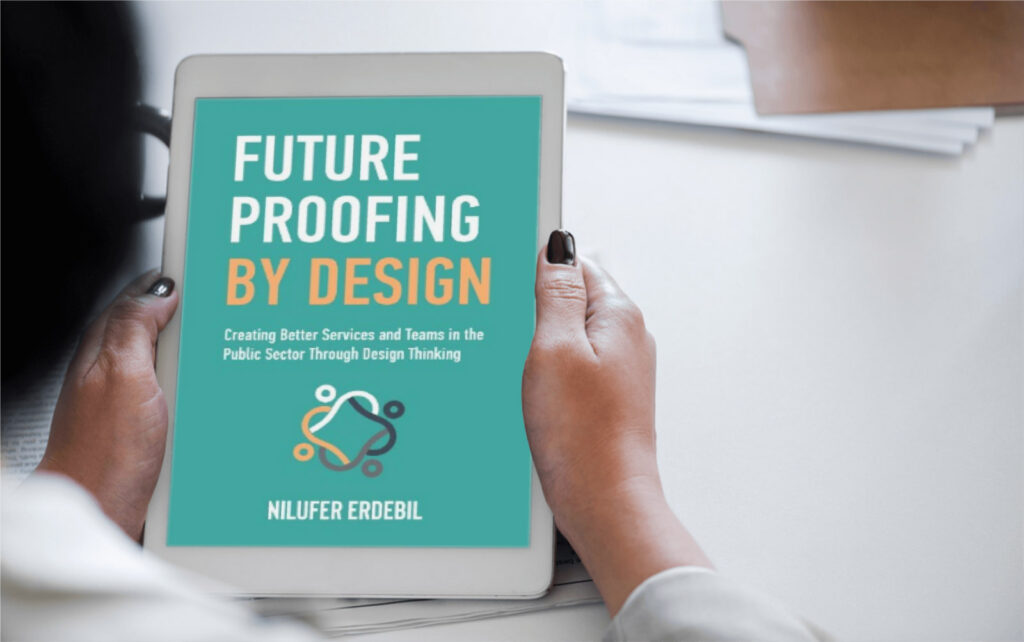



In "Future Proofing by Design", readers will gain an insightful understanding of design thinking and its applications in today's rapidly changing world. The book contains effective tips, techniques, real world examples and much more - helping readers identify problems before they arise so solutions can be generated to achieve long-term success. It emphasizes the importance of using design thinking proactively as a tool for future proofing organizations and governments to become resilient against change!
By focusing on the idea of future-proofing and showing how design thinking can be used as a tool for organizational resilience, this book provides a unique and and valuable perspective on the subject. It's not just about learning the basics of design thinking, but about using that knowledge to create a more resilient and sustainable future. Whether you're a seasoned design thinking practitioner or just starting out, this book is a valuable resource for anyone looking to stay ahead of the curve in today's rapidly changing world.
Get your copy now! Available in paperback or digital download.



What is Future Proofing by Design?
The book shows you how to look at a problem differently before jumping to a solution. You’ll learn how to understand the people affected by a problem, define what you are really trying to solve, explore ideas, test them, and improve them along the way.
With simple explanations, step-by-step guidance, real public-sector examples, and easy-to-follow visuals, the book makes design thinking practical and accessible.
Who is this book for?
This book is for anyone who wants to solve problems differently and create better outcomes for people. It is especially useful for:
- Public-sector leaders and managers
- Transformation and innovation teams
- Service designers and policy professionals
- Project and change leaders
- Teams improving programs, services, or processes
- Anyone who wants a practical introduction to design thinking
What will you learn?
1. Shift from solution-first to problem-first thinking
Move beyond the pressure to immediately find an answer and learn how to understand the problem and the people experiencing it, before designing a solution.
2. Define the problem and what success looks like
Establish an initial understanding of the challenge and meaningful measures of success that can guide the problem-solving journey.
3. Put people at the centre of problem solving
Understand the needs, expectations, goals, values, and challenges of the people who use or are affected by a service.
4. Know when to diverge and when to converge
Explore different perspectives and possibilities before narrowing your focus, using divergent and convergent thinking to move effectively through the problem and solution spaces.
6. Test, learn, and adapt through iteration
Understand that good solutions rarely emerge perfectly the first time. Learn how to move back and forth through the process, refine your thinking, and test ideas early.
7. Apply design thinking beyond the workplace
Use the principles of human-centred problem solving not only in government and organizations, but also when approaching challenges in other industries and even in everyday life.
Why design thinking matters in government
Design thinking helps government teams look at problems from the citizen’s point of view. It encourages teams to listen, ask questions, challenge assumptions, work together, explore ideas, and test solutions before making big decisions.
It also brings different people and perspectives together. This can lead to better ideas, better services, and better experiences for the people government serves.
In a constantly changing world, design thinking gives teams a practical way to deal with uncertainty while keeping people at the centre.
Jumping to solutions too quickly?
Struggling to understand what people really need?
Trying to improve a service, process, or experience?
Working with a team that has different ideas about what should happen next?
The book gives you a practical way to work through these challenges. Design thinking helps you understand the problem, bring people together, explore options, test ideas, and learn what works.
The Future Proofing by Design approach
The future is always changing. New technologies, changing needs, new challenges, and unexpected events can quickly change what works today.
Future proofing isn't about predicting the future. It's about being ready to adapt. Design thinking gives you a flexible way to respond to change while keeping people at the centre.
You don't have to get everything right the first time. You can try something, learn from it, make changes, and try again. The goal is to learn early, make small changes, and improve as you go.
In public sector where decisions can affect many people and involve public resources, this means testing ideas carefully before making bigger investments.
Understand the problem. Try something. Learn. Adapt. Move forward.
That's the heart of Future Proofing by Design.